Showing posts with label counseling. Show all posts

Monday, August 11, 2014

Two Headed Monkey on Your Shoulder

This post is dedicated to those who have struggled with the monsters known as addiction, substance abuse, alcoholism, and depression, as well as those who have lost loved ones to the various diseases. Mental health issues do not discriminate.
        Times like this I reconsider my annoyance at the fact that I feel like I am pursuing a degree to be licensed to do a job that I don’t really want to do, which makes my education feel like a waste. However, when I hear about someone who had struggled with addiction and mental health disorders throughout their lives, only to ultimately succumb to their demons, it makes me want to help those in need.
        I am currently almost done with my coursework to become a Licensed Professional Counselor (LPC) and often feel underwhelmed at the prospect of becoming a counselor, as I enjoy academic research and writing, to the point that I am considering to go for my PhD in psychology so I can pursue research. However, when I hear of a death of someone who battled either mental health or substance abuse/addiction, it strikes a chord.
        I have experienced what it is like to be active in an addiction (or two) as well as what it is like to have bouts of depression and emotional disorders. I know that I would much rather work with a counselor who has been there, experienced it, rather than trying to apply textbook learning to a real life situation. I’d rather sit across from someone with tattoos, turquoise hair, and experience, than someone in a stuffy suit, that’s for sure. Sure, I know that there are plenty of good counselors who may have not experienced first-hand what it’s like to be in the grips of a coke binge, alcoholic stupor, or sitting on the floor in the kitchen while crying. However, bringing personal experience to the counseling session is a valuable tool. So, while I may still cringe at some of my courses, such as child and adolescent or marriage counseling, I know that it will help me to get to where I want to be, wherever that is…
Robin Williams will be missed. If you or someone you know is struggling with addiction or mental health issues, there is help.

Friday, October 25, 2013

Missing Limbs Thrown at Classmates

So, here I am, sitting in a hotel room in Florida. I feel like I have left a limb in Texas and dread the idea of sleeping alone. Not even a dog for company. I am on the brink of tears, missing someone who I didn't even knew existed six months ago, yet here I feel lost without that familiar lump in the bed or arms surrounding me in the now familiar hug. The smell, the touch, the person. Who would have thought?

Tomorrow marks the beginning of my hell week, also known as residency. I checked in earlier today, setting my eyes upon my classmates for the first time...the same ones whom I have made jerk off motions to while reading their discussion posts online. So, that being said, this week should be interesting.

I have been reminded that I am not allowed to inflict bodily harm OR mental anguish upon my classmates. I foresee sitting on my hands and biting my tongue...better than the other way around I suppose, as my hands are already prone to bleeding. I suppose the fact that I am not staying in the same hotel as my classmates is helpful, as the school arranged a "reduced" rate at the 4-star hotel, which, for the whole week would cost over $1000...absolutely asinine. Instead, I found a hotel about 15 minutes away that has a kitchen in the room, which will allow me to eat healthier and save money. After all, I am a frugal graduate student.

There may be some updates and a lot of tweets, as my usual support system is not here with me :(

Thursday, September 12, 2013

Counseling Clients with Eating Disorders: Finding the Right Assessment

Here is the case study scenario used for the purpose of the following assessment evaluation:

The Case of Alicia

Alicia is 25-year-old female referred by her partner, Sadie. Sadie is concerned that Alicia’s eating pattern is unhealthy. Alicia insists that there is nothing wrong and is coming to counseling to humor Sadie. When asked about her weight, Alicia notes that she could still stand to lose a few pounds. She acknowledges that she likes to have a treat now and then, and puts on a little weight, but she can cut back on her eating to compensate. She reports her height as 5 feet, 5 inches and her weight as 120 pounds. Based upon the way her clothing hangs loosely off her frame, her report of her weight is likely an overestimate. Sadie is concerned that Alicia is becoming more moody. Alicia acknowledges that she isn’t very happy with herself.

Abstract
Counselors have a variety of assessment tools at their disposal when working with clients. However, if mental health professionals fail to consider the unique factors of each of their clients, such as age, gender, or cultural background, the results could be null in the way they are applied to the client. The following paper will address the case of Alicia, who, while appearing underweight, still desires to lose a few pounds. There are a variety of issues a counselor needs to address when deciding which assessment tool would be most useful when assessing Alicia’s case, including both her physical, as well as psychological needs.

Counseling Clients with Eating Disorders: Finding the Right Assessment
            Mental health professionals are often called upon to work with a variety of clients, with issues ranging from marital discord and adjustment disorders, to dealing with grief from losing a loved one and battling eating disorders. Each presenting concern is often more than just the surface issue, as there can be underlying contributing causes that has led the client to seeking assistance from a counselor.
            One of the roles of a counselor involves choosing the most appropriate assessment tool, which can, when used correctly, provide a wealth of information about the client, an insight into how the clients think and how they perceive the current situation. Assessments consist of tools which allow counselors to collect information in order to identify, analyze, evaluate, and address any problems or issues that a client may be experiencing when seeking assistance from a mental health provider. Assessments can also serve as a useful asset to evaluate the current methods of coping the client is currently using, and help to illustrate how more effective and appropriate coping methods can contribute to a more successful and positive outcome. Working in conjunction with sufficient education on the part of the counselor or mental health care professional, such assessments can assist in appraising the situation, issues, and needs of the client.
            When working with clients, it is important to take certain aspects into consideration, such as age, presenting concern, underlying issues, willingness to participate in treatment, and a multicultural sensitivity on the part of the counselor, in addition to selecting the correct and most appropriate assessment tool to incorporate into the initial evaluation of the concern, as well as the development of the therapeutic treatment plan. The aforementioned considerations will be addressed in respect to the case of Alicia in the following sections.
The Case of Alicia
            Alicia, who is in her mid-twenties, appears in counseling due to a recommendation and prodding by her partner, Sadie, who was concerned about Alicia’s preoccupation with her weight and eating patterns. Alicia presents willing to entertain the idea of counseling, if anything, to satisfy her partner’s concerns.
Initial Intake Assessment
Alicia appears to overestimate her current weight, as she states her weight is 120 pounds, which according to the body mass index (BMI) would fall within the “normal weight” range, which ranges from a BMI of 18.5 to 24.9 (http://www.nhlbi.nih.gov/guidelines/obesity/BMI/bmicalc.htm). Alicia’s given measurements places her BMI at 20.0, however, based on her physical appearance, her weight is more likely to place her in the underweight category. While there are some limitations of the BMI assessment, such as a risk of overestimating the percentage of body fat in athletes and others with considerable muscle mass (http://www.nhlbi.nih.gov/health/public/heart/obesity/lose_wt/risk.htm#limitations), the BMI allows for a cursory assessment of a possible medical concern tied to Alicia’s current weight.
Possible Issues Present
            There appears to be a few concerns present with Alicia, as her weight could be a symptom of another, more psychologically based disorder. By focusing on the physical appearance, counselors could risk developing “tunnel vision,” thus possibly missing other contributing factors, such as anxiety, depression, or other underlying issues. Alicia is in her early adulthood years, in which many mental health disorders develop, possibly due to the developmental changes which occur during these years. According to research into the field of eating disorders, most patients consists of women between 12 and 25 years of age (Fankhauser & Lee, 2009), which places Alicia at the end range. However, it is important to remember that Alicia may have been experiencing disordered eating patterns for some time before coming in for counseling, and as such, should not be discounted as a possible concern. It would be important to determine if Alicia is experiencing either an eating disorder, such as anorexia or bulimia, or instead suffering from a more diverse diagnosis of body dysmorphic disorder, or BDD.
Possible Assessments
            In order to effectively evaluate clients, it is imperative that counselors are aware of the various assessments available for them to use when working with clients. Determining the presence of a disorder can be a challenge, particularly if the client is not keen on attending counseling in the first place. The awareness of and effective implementation of certain assessments are two different aspects with which counselors need to be well versed, as the assessment is only as valuable as the accurate selection, correct administration, and skilled evaluation of the results of a knowledgeable counselor or mental health worker.
Screening for Body Dysmorphic Disorder
            While eating disorders and body dysmorphic disorder can occur concurrently, one does not necessarily guarantee the other. The Screening Instrument for Body Dysmorphic Disorder (SI-BDDr) is a screening assessment tool which consists of six screening questions which correspond to the diagnostic criteria found in the diagnostic and statistical manual of mental disorders (DSM-IV-TR). The SI-BDDr assesses a variety of criteria, including: (1) a preoccupation with a perceived or imagined flaw in appearance, and (2) the preoccupation causes clinically significant distress or impairment in social, occupational, or other areas of functioning (Dingemans, van Rood, de Groot, & van Furth, 2012). Each of the items are scored on the basis of a yes/no answer, which includes questions such as, “are you preoccupied with the idea that your body or a part of your body is unattractive, ugly, deformed or not beautiful enough?” Among the participants in a 2012 study, nearly all (96%) of the participants who had an eating disorder answered that particular question with a “yes,” regardless of the type of eating disorder present (Dingemans, van Rood, de Groot, & van Furth, 2012). The use of the SI-BDDr as a screening instrument for body dysmorphia disorder has been shown to have excellent sensitivity and specificity when used in a general mental health population (Dingemans, van Rood, de Groot, & van Furth, 2012).
            When working with clients who may have distorted body images or disordered eating habits, there are often other psychological concerns present. Some of the associated disorders, such as obsessive compulsive tendencies, social anxiety, depression, and comorbid eating disorders can often occur with or be mistaken for body dysmorphic symptoms (Mancuso, Knoesen, & Castle, 2010), thus making it imperative that effective screening is performed by a qualified counselor or mental health care professional. The appropriateness of utilizing the SI-BDDr with Alicia would depend on the answers she provided during the assessment. While her low weight and possible preoccupation with food may indicate body dysmorphia, it would be wise to also examine the possible presence of an eating disorder, as BDD and eating disorders are two different diagnoses, with different methods of action.
Eating Disorder Inventory-2
            While there is not much known about Alicia’s history as it pertains to her weight concerns, screening for an eating disorder would be beneficial. Using the Eating Disorder Inventory-2 (EDI-2) with Alicia may allow useful information to be gained, which could help to shape therapeutic treatment plans. The EDI-2 consists of 91 items, which consists of three subscales that address the behaviors concerning eating, weight, and shape, as well as psychological subscales which consists of items which are relevant to eating disorders, such as ineffectiveness, perfection, interpersonal distrust, interoceptive awareness, and social insecurity (Schinke, 1994) and can be completed via self-report in about 20 minutes. The EDI-2 has been shown to be effective in both male and female clients over the age of 12 years.
            The EDI-2 has been shown to be effective when assessing for the presence of a variety of eating disorders, including anorexia nervosa (both restricting and binge-eating/purging types), bulimia nervosa, and eating disorder not otherwise specified (NOS). Previous research into the validity of the EDI-2 has revealed that it is an appropriate assessment tool when measuring the presence of eating disorders, however the results appear to be more reliable when using the assessment with female clients, as compared to male clients experiencing eating disorders (Spillane, Boerner, Anderson, & Smith, 2004). Since Alicia is a female over 12 years of age, the EDI-2 would be an appropriate tool to utilize when assessing for the presence of a possible eating disorder.
            Depending on the answers provided by Alicia on the assessments mentioned above (the EDI-2 and SI-BDDr), further screening may be required, such as incorporating the Beck Depression Inventory, which could help to address any of the underlying psychological issues that could be contributing or existing concurrently with the disordered eating habits exhibited by Alicia, as previous research has suggested that there is a strong association between the two variables of depression and eating disorders (Troop, Serpell, & Treasure, 2001).
Ethical Use of Assessments
            As a professional within the mental health care field, counselors have an ethical requirement to abide by a certain set of rules and regulations, which help to protect both the client and the counselor when conducting a variety of assessments within the professional domain. Among the core ethical obligations for counselors to uphold are professional competency, integrity, honesty, confidentiality, objectivity, public safety, and fairness (Schmeiser, 1995).
            Most of the branches of counseling have a code of ethics, by which members pledge to abide by and uphold throughout their professional career. According to the American Mental Health Counselors Association (AMHCA), Principle 4 addresses the utilization of assessment techniques, including test selection, administration, interpretation, and test reporting (AMHCA, 2000). Within the test selection category, counselors who select the use of a combination of tests, such as proposed for Alicia, counselors must be able to justify the reasoning behind their choices (AMHCA, 2000, 4.A.2.), which has been sufficiently addressed in using the possible combination set forth in the current treatment assessment plan.
Additionally, the American Counseling Association (ACA) addresses the importance of the ethical use of assessments in the professional realm, as Section E of the ACA Code of Ethics (2005) contains information which pertains to the evaluation, assessment, and interpretation of the results gathered through the use of assessments in a counseling setting. According to the ACA, assessment instruments are just one of the components of the counseling process, and that counselors need to be careful when considering which instrument is used, consulting the validity, reliability, and appropriateness for the particular client for which it is intended.
            When taking into account the ethical codes set forth by both the AMHCA and the ACA, the assessments addressed in the current paper, specifically the Screening Instrument for Body Dysmorphic Disorder and the Eating Disorder Inventory-2 when used to assess the presence of either body dysmorphia or eating disorders, or while not addressed in entirety, the possible administration of the Beck Depression Inventory, all appear to be appropriate and without ethical contradiction when used correctly with Alicia.
Cultural Considerations
            Just as the AMHCA and the ACA have regulations set forth in their individual codes of ethics regarding the administration and use of assessment tools, they too have regulations that address the importance of not only the counselor being well-versed in a variety of multicultural topics as they pertain to the counseling setting and therapeutic interventions, counselors are also reminded to be cautious when selecting assessments, paying regard to any shortcomings or assessments which may lack appropriate psychometric properties for the population or demographic of the client (ACA, 2005, E.6.c.). As per the AMHCA ethical guidelines pertaining to the client specific cultural considerations, counselors are reminded to select tests and assessments that are appropriate to the client, with norms, when applicable to the specific assessment, that fit the client’s demographics, such as age, gender, and race (AMHCA, 2000, 4.A.5.). Likewise, during the test interpretation phase, counselors are prompted to take into consideration possible multicultural factors in not only the test interpretation phase, but also the diagnosis, prognosis, and therapeutic treatment plan design (AMHCA, 2000, 4.C.5.).
            When assessing the cultural aspects of the tools suggested for administration with Alicia, there does not appear to be any possible contradictions, as while the Eating Disorder Inventory-2 has shown to be not as reliable when used with male participants (Spillane, Boerner, Anderson, & Smith, 2004), Alicia is a female, which would not pose a problem with the administration of the EDI-2.
Conclusion
            While clients may present with more obvious concerns, such as a below-healthy body weight, as with Alicia, there may be other contributing causes which can be assessed through an effective counseling relationship, incorporating the use of appropriate assessment tools. If a counselor were to treat merely Alicia’s weigh concerns, ignoring the other aspects, such as her acknowledgement that she isn’t very happy with herself, the counseling may not be as effective as if the therapeutic plan approached Alicia’s treatment in a more holistic fashion, allowing for the existence of possible other contributing factors, such as anxiety and/or depression. Through pursuing the eating disorder and possible body dysmorphia issues, a counselor working with Alicia may be able to make headway in the other realms of Alicia’s life.
            The administering of assessment tools with clients requires counselors be cognizant of both the ethical and multicultural considerations which may apply and could possibly create a contraindication with certain assessment tools. However, while some tools may be designated as inappropriate for certain groups or demographics of clients, there are usually a number of other assessment tools at a counselor’s disposal when working with clients, which may be better tailored to work with certain multicultural concerns.
**References Available Upon Request**

Thursday, September 5, 2013

The Importance of Self-Monitoring and A Personal Example

Self-monitoring
The act of utilizing the hypothetical filter that exists between the mind and the brain can be an invaluable tool for counselors when working with clients, particularly during high stress situations. Counselors need to refrain from saying or acting in a way that could hamper client success. Just as counselors ask their clients to monitor their behavior and thoughts as part of possible homework project, counselors too need to remain cognizant of their behavior.

Personal Experience
Having had the benefit of working in a few different group homes, with clients ranging from those experiencing developmental delays including fetal alcohol syndrome, unmedicated paranoid schizophrenia, and even clients who were placed into a group home setting by the legal system due to them being adolescent sex offenders who, if it wasn’t for their diminished mental capacity, would be incarcerated.

Each of these environments provided many opportunities in which I needed to self-monitor both my words and actions. One such example was when a client was upset that I had brought up to my boss that the client was “Facebook friends” with a few of the staff members, which is a violation of boundaries. The client and staff members were instructed to “de-friend” each other, which set the client off into a behavioral spiral, which included punching of walls, throwing of furniture, and eventually cornering me into a room and attempting to physically assault me.

Due to the legal aspect, staff members are provided with instruction and lessons on personal protection intervention (PPI), in which we are taught how to detain clients as well as protect ourselves from receiving physical harm. When the client cornered me and locked me in a room with him, as he blocked the door, I had to use self-monitoring, both on the verbal and physical levels. I had to remain calm in demeanor, working to use my words and tone to convey the message that this was not approved behavior. Additionally, in my off time I enjoy kickboxing and sparring with a 100 pound heavy bag as well as MMA training, so I had to resist doing what I use in those instances. Yes, part of me wanted to use these moves, but I had to listen to, and be the voice of reason.

By remaining calm in the above situation, I was able to diffuse the conflict without coming to blows with the client. Additionally, I was able to work with the client after that...until he told his counselor that he wanted to kill me a few weeks later, complete with a plan, including method and time. Thankfully the counselor, who I had met and worked with in the past, utilized the appropriate Duty to Warn counseling ethics and notified me of the situation, or potential situation. However, my boss kept me working one-on-one with the client despite a continual escalation in the behavior and the threat, which eventually led to my leaving the company due to providing an unsafe work environment.

Tuesday, August 27, 2013

Religion, Spirituality, and Counseling: Can they Coexist?

While I may not post my weekly course discussions here, some I find could be of benefit to others. This is one such instance. Religion and sexuality are two "hot button" issues for me, and when they come up in my coursework, I don't hold back. I attempt to educate, tactfully of course, my classmates on how they are narrow minded and really need to open their eyes to the world around them. Sadly, when I do such things, very few interact with or engage in conversations. I feel bad for their future clients, as so many have stated that "I would have a problem working with a client who does not believe in Christ," and "I would not want to work with gay clients because my religion considers it to be wrong." Seriously? According to the Code of Ethics, counselors are reminded not to discriminate based on age, gender, religion, or sexual preference. I guess that means more clients for me in the future. Oh, and don't get me started on the fact that many of my classmates have stated that they "believe in miracles." Fuck. I should apologize for my views, as they may alienate some, but the views of many alienate me.
Differing Spiritual Views
            With an estimated 85-90% of people within the United States identifying as religious (Zuckerman, 2009), it is important for counselors to possess the ability to understand the views of another person. While many within the counseling field are aware that there are a variety of religions and have stated that they will be willing and able to work with clients of differing religious faiths, very few have mentioned the inclusion of atheism and non-spirituality as it pertains to the multicultural issues of counseling. Just as the ability to provide counseling as a Christian to a Muslim believer, it too is important that counselors are willing to provide counseling to an atheist as well. However, such oversight is not solely on the shoulders of the counselors, as very little literature has focused on addressing how a counselor can approach a client who identifies as non-religious (D’Andrea & Sprenger, 2007).
Working with Clients Who Are “Different”
            Being within the minority on the realm of religion, I have had many opportunities to work with clients who have had different belief systems from myself. Through my varied education in a variety of religions, I am able to speak with clients on a number of topics, some of which revolve around religion. Being aware of my personal beliefs, including the fact that not everyone will share them, allows me to be comfortable in a state of cognitive dissonance, as I can separate my personal beliefs from those of my clients, neither being right or wrong, just different.
            Through developing an understanding of a variety of religions, it can assist counselors in understanding the way their clients view their lives, complete with the influence religion has in their lives, as well as the way it helps to shape their beliefs, goals, and values. If the topic of religion comes up during a counseling session, providing assistance does not depend on who happens to have the best belief system, but rather how the client’s personal views on religion can influence their lives, for better or worse. It is the job of the counselor to help the client to be successful as they define it, not how the counselor defines success.
            If religion does come up during a session and a client asks about my personal beliefs, I am aware that many individuals have negative views of atheists, many associating atheism as being morally corrupt, with an estimated 54% of Americans having an unfavorable view of atheists and even giving them a lower priority on a kidney waiting list when compared to Christian patients (Zuckerman, 2009). If I was directly asked, I would not hide my personal views from the client, knowing that they may choose to be referred to a different counselor whose views align more with the views of the clients.
References
D'Andrea, L. M., & Sprenger, J. (2007). Atheism and nonspirituality as diversity issues in counseling. Counseling and Values, 51(2), 149-158.
Zuckerman, P. (2009). Atheism, secularity, and well-being: How the findings of social science counter negative stereotypes and assumptions. Sociology Compass 3(6), 949-971.


Tuesday, August 13, 2013

Family Dynamics and Hollywood: Analyzing the Family Subsystem of Gil in Parenthood

Abstract
Families are an ever changing and evolving dynamic, each generation facing their unique challenges. However, there are often underlying commonalities that take the form of behaviors that are passed down from one generation to the next. With the help of a genogram, these relationships and behaviors become clearer, which allows for clients and counselors to recognize the patterns and embrace the positive aspects, while coming up with effective ways to deal with the not so positive inherited behaviors. This paper analyzes the family dynamics found within the Buckman family in the movie Parenthood (1989), with a focus on the subsystem consisting of Gil, his wife Karen, and their three children. A brief overview of two proposed family therapy models is also introduced, with suggestions of how each would be applicable to the Buckman family members.


Family Dynamics and Hollywood: Analyzing the Family Subsystem of Gil in Parenthood
            The way a family works, or doesn’t work, is unique to that particular family subsystem, as the experiences and interactions are specific to the family involved. As such, it is important to analyze the family as they are not what society deems to be what a family should consist of and how they should function. In order to more effectively assess the unique characteristics and dynamics present, counselors working with families have many tools at their disposal to allow for a holistic examination of the positive aspects as well as the possible red flags present in families. One such tool, the genogram, allows the counselor and the clients to recognize patterns and allow them to delve deeper into the possible causes of their current family turmoil.
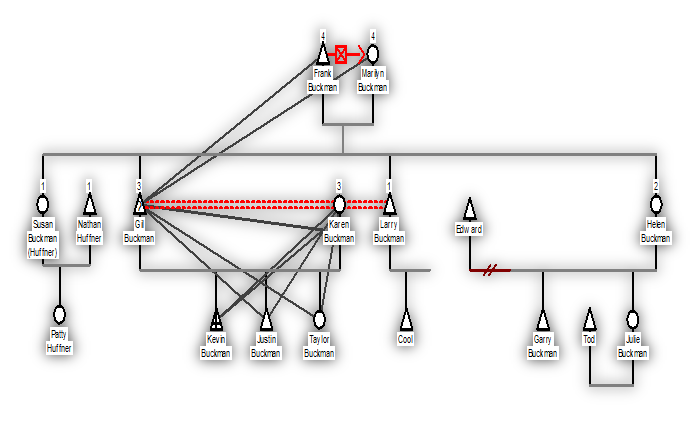
Genogram for the Buckman Family


Family Dynamics
Immediate Family System
            When analyzing the family dynamic of Gil in the movie Parenthood (1989), there are several underlying contributing factors that may have allowed for the development of the current family state, primarily the stress that occurs as a family grows and evolves. It is relatively common for families to continue to evolve over time, as they move from one developmental stage to another. Gil and his wife Karen are both in their middle 30s to early 40s, and raising three children, Kevin, Taylor, and Justin. Gil plays an active role in the family and the communication between Gil and his wife, as well as Gil and his children appears to be healthy and respectful.
            While the communication is healthy, there does appear to be some turmoil arising in the family, primarily due to the troubles their son Kevin is experiencing in school. By analyzing the behavior of both Kevin and Gil, it appears that they share a desire to like things in a very specific way, in which dealing with change can be a challenge. Gil has some signs of possible Obsessive Compulsive Disorder, which may have been passed onto his son Kevin. Obsessive Compulsive Disorder or OCD sometimes runs in families and involves the areas of the brain associated with fear and anxiety (NIMH). Such an example as seen in Gil is when he was focused on finding his son Kevin’s retainer, digging through garbage bins and afterwards scrubbing his hands under a hose spigot. Such obsessive qualities were observed in Kevin’s behavior throughout the movie, which brought him great distress. However, there appeared to be more anxiety present than obsessive qualities, especially during his Little League practice and games and worrying about school and what his classmates think of him.
            The familial relationship between the other two children, Taylor and Justin, appear to be healthy, both between their siblings as well as with their parents. However, as Kevin’s OCD and anxiety episodes increase in the number of incidents and severity, Taylor and Justin risk not receiving the amount of attention they are currently used to receiving from their parents, which may result in negative attention-seeking behavior. Such behavior occurs when a child is not able to get the attention they desire or are used to receiving from their parents or caregivers (Goldsmith, 2010). Counseling and effective communication within the family can help to limit the likelihood of developing negative attention seeking behavior or other emotional distress.
            One of the biggest strengths in Gil’s direct family is the empathy shown between family members. As Gil experiences stress at work and decides to quit (not knowing that his wife Karen is pregnant), he and Karen are able to discuss the issue and come to a conclusion in a responsible and amicable, not to mention respectful way. The open dialogue also extends to the children within the family too, as there does not appear to be a stigma present regarding Kevin’s seeing of a counselor to help him deal with his anxiety issues.
            One weakness present in Gil’s immediate family, other than the possible hereditary anxiety issues is the overprotective qualities shown by the parents towards their children. They admitted to the school counselor that they were overprotective of Kevin when he was younger, which appears to still be present today. Gil’s own personal desire to make everything orderly within his life is challenged by his marriage to Karen who is more comfortable with the unpredictability associated with having children. The roller coaster metaphor used by Gil’s grandmother is instrumental in identifying the underlying differences that exist between Gil and his wife Karen.
Expanded Family Systems
As a child, Gil experienced a distant relationship with his father, often spending more time with other adults as opposed to spending time with his father. One such example was as a child, Gil and his father would go to a baseball game. However, instead of enjoying the time with his father, he would be accompanied by an usher working at the stadium. Gil did not desire to repeat the same behavior with his own children, as his father had viewed raising children as a “job” rather than as a joyous position. The distant relationship may be a contributing factor to Gil’s near over-involvement in the lives of his own children, including coaching his son Kevin’s Little League baseball while also working full time.
            As an adult, the relationship between Gil and his father continues to be distant, yet mutually respectful of one another. Despite the relationship being strained, it can still be viewed as a positive one. The relationship between Gil and his mother is not as clear, as his father appears to be a dominant personality, which extends to how he interacts with his wife, who has adopted a demure and quiet role in the family. Gil’s father appears to be more involved with Gil’s younger brother, Larry, who is troubled by a possible gambling addiction. While the relationship was not always close (his father kicked his brother Larry out while he was still a teenager) their father does show a desire to be close, in his own way, however, which is primarily shown by offering financial support and offering to care for Larry’s son, Cool. Such perceived preference among siblings could possibly be a behavior that has been passed onto Gil and his treatment towards his son Kevin. Gil should remain cognizant of such preference, in order to prevent negative attention seeking behavior or feels of being rejected among Gil’s other children, Taylor and Justin.
            Gil married a woman who was not like his mother, as his wife, Karen, is smart, outspoken, and involved in the life of her husband and children. There appears to be more effective communication between Gil and Karen than between Gil’s father and his mother, which allows for a positive exchange of dialogue between the head members of the family, each able to contribute their ideas to the family.
            Relationship patterns are often a product of the environment and the family system present during the childhood of the individual. Families often repeat themselves, in particular, the behaviors that are passed on from one generation to the next (McGoldrick, Gerson, & Petry, 2008). One of the behaviors that have been passed down to most of Frank and Marilyn’s children is the great pride they take in caring for their children. Larry seems to be the exception to the behavior, as he ends up leaving his son Cool with Frank and Marilyn in order to pursue a hare-brained get rich quick scheme.
Family Therapy Models
            Choosing the right and most appropriate model of family therapy can be a challenge, as families do not fit nicely within one category or another. Counselors need to take the unique intricacies into account when deciding on which approach to utilize with their clients. When considering the needs of Gil and the Buckman family, two family therapy models that could be useful to address the issues at hand consist of the Solution-Focused Brief Therapy (SFBT) and Narrative Therapy.
Solution-Focused Brief Therapy
            Solution-Focused Brief Therapy, or SFBT, focuses on finding solutions, rather than focusing on the problems that brought the couple to seek counseling. SFBT is a goal-driven and practical model which sets clear and concise goals. The straightforward approach may be more suited for individuals like Gil, who desire order and thrive on knowing what is expected of them. Such an approach may also be useful when working with clients who are experiencing anxiety disorders, as well as depression and issues related to self-concept and self esteem (Kim, 2006). Additionally, the SFBT approach may be useful for other members of the expanded family, such as Larry, since it has been shown to be effective with problem gambling (Kim, 2006).
            The use of the Miracle Question within SFBT is a useful tool, especially when working with couples, as it allows each member to share what they think life would be like if the identified problem was gone from their lives. The Miracle Question yields insight and allows the counselor and clients to work towards coming up with small steps that can be taken to align their envisioned life with their current one. While the communication between Gil, Karen, and their children appears to be effective and respectful, with the new baby on the way, it would be useful to implement the homework part that is associated with SFBT, in particular assignments that focus on maintaining the level of communication that is present in the family currently.
Narrative Therapy
            Narrative therapy would be a useful choice for working with the Buckman family, as it focuses on separating the person from the perceived problem. Rather than pointing fingers and placing blame upon individual family members, instead the Narrative approach allows for the family members to develop, along with the counselor, adaptive and healthy behaviors to appropriately deal with the issue at hand. One of the useful aspects of the Narrative approach includes the fact that it has been shown to be useful when working with children to reduce anxiety. By separating the child’s anxiety and worry from who they are as a person, they can experience a reduction in both anxiety and anxiety-related behaviors.
            While Gil and Karen’s son Justin may not be able to verbalize his concerns due to his age, the Narrative therapeutic approach has been shown to be useful when working with young children. At times, it utilizes a form of play therapy which allows a skilled and specially trained counselor to interact with the younger members of the family which can allow them to feel included in the therapeutic process (Larner, 1996).
Conclusion

            The family dynamics witnessed in the Buckman family is multifaceted, and while there may be differences between the nuclear and expanded family systems, they do share an underlying similarity. Utilizing the genogram, it is easier to identify the similarities and patterns present in an extended family, as well as the types of relationships present between members. Genograms also allow for clients to see the patterns that family members pass on, which include their worldviews, strengths, and resiliencies (Chavis, 2004), as well as the ineffective methods of coping and interaction that have been passed down the generations. By working with the family in the suggested therapeutic approaches, the anxiety and other related concerns that affect Gil, Karen, and the rest of their family in working through their current issues, as well as any that may arise in the future. It is important to remember that as individuals change, so do their roles within the family, and as such, the therapeutic styles need to be reevaluated for “goodness of fit” during the therapeutic relationship.

**References available upon request**