Showing posts with label depression. Show all posts

Friday, January 5, 2018

Ways the VA Healthcare Program is Hurting Local Veterans

            Prior to moving to the Durango, Colorado area, I had been enrolled in what is called the Choice Program, which provides military veterans, as well as their dependents, to obtain care from community resources that are not provided through the VA system. This is the system I used to receive services such as rheumatology, gastroenterology, and dermatology. For the most part, this system helped to provide me with the resources I require to tend to my health needs. Sure, the physicians and specialists could have just as well been military doctors, as I received the same quality of care from them...and that is not saying much, considering my previous experience with military doctors, but I digress.
Image result for va health choice program

            When I had my initial appointment with my new primary care provider, I was told something that just came across as blatantly wrong. See, my doctor told me that my only options to see these types of specialists would be to drive nearly 4 hours each way to the large VA facility in Albuquerque, which is insane to suggest, or not see any specialists. Sure, they have a courtesy shuttle van that takes patients to the larger facility, but you must plan your day around the appointments of others, so you would either leave early, or must stay late, depending on the schedule for that day. The other option just was not feasible either, as I have a family history of colon and bone cancer, as well as having been diagnosed with a myriad of chronic pain conditions.
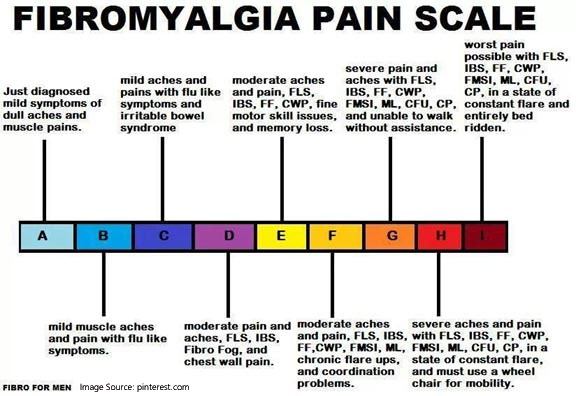
Image result for fibromyalgia
I live at a Level E on a daily basis, just for reference
            You know the saying “if it sounds too good to be true, it probably is?” Well, that is applicable to my situation, but rather replace “good” with “wrong” and you see where I am going with this, right? Well, when I met with the social worker at my local VA clinic, she repeated the same incorrect information regarding the Choice Program. She told me that, while there are services in town, such as support groups, there is little in the way of community resources that address symptoms. I can’t really go to a support group for my colonoscopy or endoscopy now, can I?
Image result for colonoscopy
            My social worker also told me that I am my own advocate for my health, which is a phrase that she might be wishing she didn’t say. See, I thought that the information I was provided by not just one, but two medical professionals at my local VA clinic, sounded incorrect. Just in case though, I called the Choice Program directly, and boy, am I glad. The representative that I spoke with was just as befuddled by what I was told as I was when I heard it. It helped to put my mind at ease, knowing that I was correct about this program, as well as the fact that I would (hopefully) be able to see a provider here in the community, as my symptoms have increased since my last visit to the shoddy rheumatologist who reprimanded me for crying out in pain when he took a biopsy from my thigh at 5:30 in the morning, before I was fully numb. But again, I digress and that, along with the other numerous experiences I have had with military health officials and those covered by the Choice Program.
Image result for conundrum
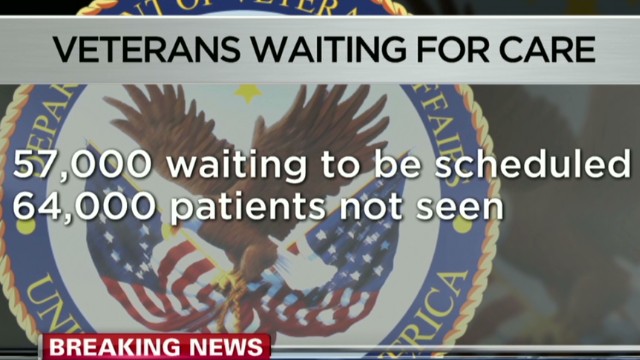
            So, here is my conundrum. Yes, I am my strongest advocate for both my mental and physical health. The soonest they could schedule me with a mental health professional (to address my depression, anxiety, PTSD, and MST) is the end of February, and even then, it would be only via tele-health. That falls outside of the 30 days or 30-mile rule that applies to the Choice Program (maybe not the distance, but certainly the time-frame). In the past, I have conveniently fallen through the VA health cracks, as it had taken me 18 months to even get an appointment with a rheumatologist, as the original request somehow got lost. I know that I am in the right and have a whole organization and website that provides me with the answers to help to support my position. I know that I am most likely not the only veteran in the area who has been fed this lie. However, I may be the only one to raise a little hell over the incorrect information that could have potentially affected the lives of a significant number of veterans living in the area.
Image result for va community care
            I have been known to let my emotions get the best of me, particularly when I know that I am in the right. This isn’t just relegated to my health, but also where we used to live, I have been physically threatened when I spoke up for the poor treatment of the dogs I would witness running in the street. As if it were my fault that I recognized this behavior as wrong and dangerous. I am not kidding. I wish I were. So, I need to come up with a game plan of sorts, as I know that I need to go into the clinic and let them know that they are wrong, that I qualify to see community providers that honor the Choice Program in the area. I know that other veterans have experienced this same type of treatment. The sooner the better, but, dude, I am not looking forward to it. I just need to keep my cool, and remember why I am doing this...for the health of not only myself, but the countless veterans who have received the same misinformation. Sadly, I know that this not only applies to my local clinic, but the Portland, Oregon one too, as that is who contacted me to set up my appointment for the tele-health mental health sessions...I was told that since they can provide me with the tele-health services, then I don’t qualify for community care. Well, that is not true either.
Image result for don't let your emotions get the best of you


Monday, October 16, 2017

Uprooting and Stress: Is There a Better Way?


Image result for twister
Imagine this with explosive diarrhea
     

Image result for marijuana
Nature's Pain Relief

       Dude. I don’t even know where to start. It has been such a whirlwind and at times it feels as if I am barely hanging on, fingers about to slip into the swirling vortex of stress, anxiety, and, at times, depression. Fun times, right? Let’s not forget about the physical effects of this emotional turmoil, as I live with fibromyalgia and small fiber neuropathy, which can be aggravated by stress. Good thing I am not stressed, right? Oh, and diverticulitis and IBS are also affected by stress, so we’re over here playing naked Twister, trying not to soil ourselves. Great visual, right?     
       
So, how did we get here? Trees and heat. Seriously. See, I am not a fan of the heat and grew up in the San Francisco Bay Area, where the use of air conditioners was not something that was common, as the fog would often roll in, working as Mother Nature’s air conditioning. I currently live in the desert. Sure, there are some trees, but nothing like I lived among in the Pacific Northwest, where I was living prior to moving to Texas, then New Mexico. Fortunately, I work from home, so as long as I have an internet connection and WiFi, I’m good. Well, my boyfriend has been putting in for jobs with his company in various states, but all of which had cooler weather and either medicinal or recreational marijuana. Those were our main criteria.
Image result for pets are forever
Animals are friends for life. Not disposable. Not ours to eat or breed.
            Fast forward a few months and DING-DING-DING, we are bound for Durango, Colorado. Oh, and his supervisor wants him there in about two weeks. TWO WEEKS. TWO. MOTHERFUCKING. WEEKS. Not a problem. Let’s just work on finding a place, packing up all of our belongings, including our dogs, a turtle, and fish (because we are not the kind of people who put dogs up on Craigslist for “free” because they are moving to a new place that doesn’t allow pets), and move to another state in two weeks. Simple, right? Fuck.
Image result for dashed hopes            So, in order to ensure that we are not homeless once we arrive in Durango, we took a trip up there. Leaving a little before 5am and getting back after 10pm, it was a long day. But, we met with a realtor who showed us a place that we had been talking with the current tenant and landlord. Everything was going well until Monday morning, today, when I received an email from the current tenant, who stated that the landlord was not satisfied with our background check (namely my credit report), and as such, we would not be considered further for the house that we wanted to rent. Hopes? Dashed to smithereens. My heart sank.
Related image
Guaranteed to make you feel sexy as hell
            Perhaps my mood to hearing that we wouldn’t be able to rent the house we looked at was intensified due to an event that occurred earlier in the day. I have been having terrible post nasal drip for the past few months. It got to the point where I physically collapsed several times, hitting my head on a hard surface a few times due to becoming very lightheaded while trying to clear my throat of stuff that can only be described as having the consistency of cold molasses. I finally conceded to go to our local VA health clinic, where they gave me a shot of an anti inflammatory and prescriptions to the EXACT SAME FUCKING THING I HAD BEEN TAKING. Same dose. They then told me to come back into the clinic within the following week if I am not feeling better.
Image result for va health care bad
Not so Breaking News
Well, I am not feeling better, so I went back to the VA clinic this morning, prior to hearing the news about the place. Good thing too, as I would have probably been placed on a 5150 hold and unable to do the things I need to do in regards to the move, school, and work. After filling out the triage form, I took a seat and waited to be called back to be seen. That would not happen today, as a nurse (?) called me up to the window and told me that they can’t see me anymore since I had been referred out via the Choice program and had a civilian primary care provider now. Well, I saw that person once, for about five minutes, and she didn’t listen to me at all during that time. I was also told the previous week to return to the clinic location if I wasn’t feeling better. See the frustration?
Image result for creepy house
Not actual house
So, we’re back to square one, looking for a place to live, while residing in a different state, seven hours away. We have expanded our search radius. I didn’t want to, as it snows there and my boyfriend will have to drive in the snow, which is why I wanted to be relatively close to his work, which is in Durango. We will be filling out more applications. One place looks like a murder house, but it’ll do for now, as the owner will be fixing it up more come the warmer months and then put it up for rent for a much higher price I presume.
Image result for donations
You can donate by hitting the word PayPal
I am not one to ask for help lightly. I often pride myself on my ability to do things all by myself. However, I am not sure I will be able to maintain my sanity without a little help. I have been diagnosed with a number of chronic pain conditions, which are intensified by stress. I am trying to keep myself together, as the next month will be very stressful. If possible, if you feel so inclined, I have set up a link via PayPal if you would like to help me to maintain some sanity while we go through this stressful time. My boyfriend’s company isn’t providing any relocation assistance, so it’s just us, our savings, and rescues. After we get settled in the new place, wherever that may be, I will be working on my mental and physical health, finishing up my last course towards my MS degree in Clinical Psychology with a specialization in Applied Research, and hopefully able to breathe once again.


Thank you for reading and feel free to share this post with others 😀 

Tuesday, June 20, 2017

Psychological Disorders: Neural Components of PTSD, Cultural Influence, and Treatment

Abstract
There are a number of psychiatric conditions that can affect the lives of military veterans and active duty members. One such condition is posttraumatic stress disorder, which can be accompanied by symptoms that can make life challenging. However, there are a number of underlying biological and neural causes that may contribute to the development of some of the symptoms. This recognition has helped to shape some of the treatment options and therapeutic interventions that are commonly used to address the symptoms of posttraumatic stress disorder.

Keywords: PTSD, veterans, neuroscience, mental health

Psychological Disorders: Neural Components of PTSD, Cultural Influence, and Treatment
            The body has a number of reactions to various stimuli, which are designed to alert and warn individuals of potential danger, leading to an increase in the likelihood of survival. However, in some instances, the reaction to these stimuli can lead to the development of various psychiatric conditions. One such reaction occurs to the exposure to one or multiple stressful events, which can trigger the onset of symptoms that are associated with a condition called posttraumatic stress disorder, or PTSD.
It has been shown that up to 15% of military members, both active duty and those who are veterans of the military experience symptoms that are associated with PTSD, with a significant percentage of these military members becoming debilitated and unable to participate fully in life (Dursa, Reinhard, Barth, & Schneiderman, 2014). As such, understanding the various influences on the development of symptoms that are associated with PTSD, along with the level of exposure and knowledge a mental health professional has on the topic of PTSD, can help to provide patients with the highest quality of care to adequately address his or her symptoms.
PTSD and Behavior
            It should be expected that following the exposure to a traumatic event, or even reading or watching media that details traumatic events, could lead to a change in one’s behavior. Traumatic experiences can lead to changes in a number of neural areas that can influence one’s behavior. For example, three of the brain regions that are often cited as being affected by the stress response that often occurs in the wake of a traumatic experience include the amygdala, hippocampus, and the prefrontal cortex (Bremner, 2006). Changes in these brain regions can bring about changes in behavior, including the symptoms that are commonly associated with PTSD such as hyperarousal, nightmares, difficulty in memory and concentration tasks, and a heightened startle response (Bremner, 2006).
Influences on PTSD
            Humans do not exist in a specimen jar, and as such, they are vulnerable to a number of internal and external stimuli and influences that can affect the behavior and experience of symptoms associated with various psychiatric conditions, including PTSD. These influences include structural, anatomical, physiological, and cultural factors. Through providing a foundation for the cultivation of a deeper understanding of the role these influences have on a person experiencing symptoms of PTSD, psychologists, therapists, and other mental health professionals can be prepared to treat patients in the most effective manner.
Structural
            There are a number of neurobiological changes that have been observed in the brains of individuals who have been diagnosed with PTSD. This includes neuroendocrine and neurochemical components (Sherin & Nemeroff, 2011). Changes in the volume of various neural structures, such as the left hippocampal section of the brain as well as gray matter volume have been found to be reduced in the brains of individuals who have been diagnosed with PTSD (Zandieh et al., 2016).
Anatomical
            As mentioned in an earlier section, the hippocampus, amygdala, and cortex are the neuroanatomical areas that are often affected in the wake of a traumatic experience. More specifically, a reduction in the volume of the hippocampus is thought to be responsible for altered stress responses (increased startle response); increased activity within the amygdala can also play a role in hypervigilance and threat appraisal issues (Sherin & Nemeroff, 2011). Additionally, when the cortex is affected, namely reduced volume and activation in the prefrontal, anterior cingulate, and medial prefrontal areas of the brain, can lead to cluttered thinking and fear appraisal (Sherin & Nemeroff, 2011).
Physiological
            The exaggerated startle response is one symptom that is often associated with PTSD and is a topic that has been explored in the body of literature in order to conceptualize this condition. According to a study conducted by Butler et al. (1990), individuals who have been diagnosed with or experience symptoms of PTSD, specifically the increased startle reactivity, can be observed via a lowered startle threshold when stimuli are presented. This may help to explain the ability for certain sounds, such as the backfire of a car and other auditory stimuli, to startle individuals who have been diagnosed with PTSD, while the same sounds do not have the same effect on other individuals who have not developed symptoms of PTSD.
            More recent research has identified the disconnect that is present between physiological state and the psychological and/or behavioral processes that are involved in daily activities. The rapid oscillation between the body’s fight or flight response and dissociation or emotional withdrawal has been found to be an identified risk factor for the development of a number of comorbid disorders (Williamson, Porges, Lamb, & Porges, 2014). Additionally, with the constant back and forth between fight or flight and dissociation can lead to premature aging of the brain, resulting in changes in the immune, autonomic, and endocrine systems of the body (Williamson et al., 2014).
Cultural Factors
            Within the military, it is often thought of as a culture within a culture, as the traditions and regulations or rules that people follow are akin to the traditions and values that are held by various ethnic cultures. However, in this paper, only the ethnic background will be identified as a cultural factor for the sake of time and space. Research that involved veterans from various eras of conflicts has revealed that certain ethnic minority groups were exposed to a greater number of traumatic events when compared to their Caucasian counterparts (Roberts, Gilman, Breslau, Breslau, & Koenen, 2011). Additionally, veterans who fall within an ethnic minority category were found to be more likely to disclose symptoms, but only when they are paired with a counselor or therapist who came from the same ethnic background (Rosenheck, Fontana, & Cottol, 1995).
Influence of Culture and Experience on Mental Health Professionals Conception of PTSD
            Just as with the patients who do not exist in a bubble, free from internal and external influences, the same can be said for the counselors, psychologists, and other mental health professionals who work with diverse patients or client bases. As such, it is imperative that the individuals who are tasked with caring for patients put aside their own personal opinions and beliefs, in favor of evidence-based practices (American Psychological Association, 2016). Additionally, patient input can be beneficial in helping to foster not only a therapeutic relationship that is necessary
Treatments for PTSD
            Providing effective and ethical treatments for patients with PTSD is one of the most important aspects of mental health. The research that has been conducted in regards to the neurobiological changes that occur as a result of experiencing a traumatic event have helped to contribute to the development of a number of treatment options for individuals, military veterans and civilians alike, to regain their quality of life. However, it should be noted that not all patients will respond equally to treatments and a qualified mental health professional should be attuned to his or her patient’s needs and responses to treatment.
Efficacy
            The efficacy of the various types of treatments that have been used in addressing the symptoms of PTSD vary, depending on the type, as well as individual characteristics of the patient. Some research has found that, for example, cognitive behavioral therapy (CBT) and eye movement desensitization and reprocessing (EMDR) are ineffective for 1:4 to 1:2 patients who receive these types of interventions (Zandieh et al., 2016). However, this efficacy rate can also be influenced through the type and location of any structural changes in the brain. Poor treatment outcomes for patients who received CBT for the treatment of their PTSD symptoms were associated with damage to the ventral anterior cingulate activation response and parts of the amygdala (Bryant et al., 2008); poor treatment outcomes with EMDR treatment were linked to a decrease in gray matter volume (Nardo et al., 2010).
Ethics

            When it comes to treatment for patients with PTSD, there can be ethical issues that should be addressed as they arise. For instance, it is important to make an accurate diagnosis and assessment of the patient in regards to the symptoms present, with treatment focused on the patient and his or her experience of the symptoms associated with PTSD (Cahill & Anderson, 2013). Additionally, it is imperative that the risk for suicide is conducted in order to reduce the access to lethal means, if warranted (Cahill & Anderson, 2013). Healthy therapist boundaries are also important and should be an ethical consideration that psychologists and other mental health professionals are cognizant of when working with any patient, not just those who may have PTSD.